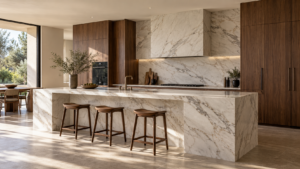
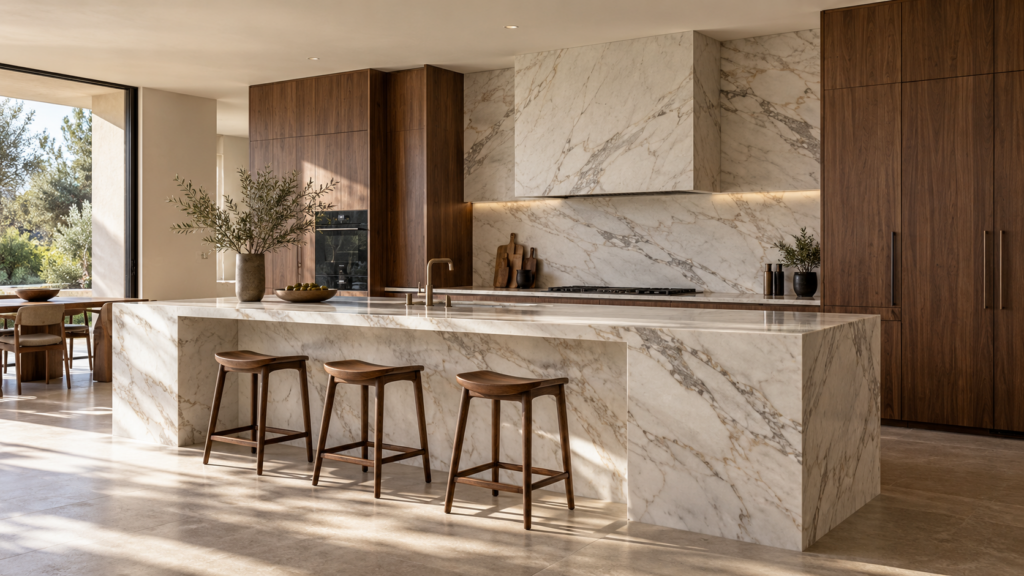
An Italian stone kitchen combines expressive stone surfaces with clean cabinetry, thoughtful proportions and a layout designed around everyday cooking. The appeal is more than a dramatic marble island: it is the balance between material character and practical detail.
For a Chennai home, that balance means considering ventilation, storage, cleaning habits and moisture alongside colour and finish. This guide explains how to plan an Italian-inspired stone kitchen, choose suitable surfaces and create a coherent space with Cmilano.
What is an Italian stone kitchen?
The term usually describes an Italian-inspired kitchen in which stone is a defining design feature. It might appear on a countertop, island, backsplash or floor. Handleless cabinetry, restrained detailing and carefully aligned surfaces help the stone become the focal point.
Italian design does not automatically mean Italian-quarried stone. Ask for the material name, country of origin and technical specification separately. Cmilano’s Culinary Studios kitchen collection brings together Italian design influences, Turkish natural stone and German hardware. Selecting the exact slab is part of creating your own material palette.
Choose the stone around the way you cook
Start with your routine. A kitchen used for frequent frying, spice preparation and family meals has different priorities from an occasional entertaining space. Compare samples in person and request care instructions for the actual product you are considering.
Marble for expressive natural character
Marble offers distinctive veining and a soft visual depth that suits sculptural islands and feature surfaces. It also needs informed care: acidic ingredients can etch its surface, and spills should be cleaned promptly. A sealant may help reduce absorption, but it does not make marble acid-proof. Choose marble because you appreciate its character and are comfortable with its care requirements.
Granite and quartzite for alternative natural stone options
Granite and quartzite offer different colours, textures and performance characteristics. Do not rely on a showroom label alone: ask the supplier to confirm the stone’s identity, finish, sealing needs and suitability for kitchen use. Review the actual slab, including any fissures, repairs and variation, before fabrication.
Engineered quartz and porcelain for a different maintenance approach
Engineered quartz and large-format porcelain can deliver a controlled visual palette, including stone-inspired patterns. Their composition and installation requirements differ from natural stone. Check the manufacturer’s guidance on heat, edge profiles, cut-outs and approved cleaners rather than assuming every surface behaves alike.
Six Italian stone kitchen design ideas
1. Let one island carry the visual weight
A waterfall island can turn a veined slab into a sculptural centrepiece. Keep surrounding cabinetry quiet and review how the pattern continues across the top and sides. Plan seating, appliance access and circulation before deciding on its size.
2. Pair pale stone with warm timber
White or cream stone sits comfortably beside walnut-toned or oak-toned cabinetry. The contrast brings warmth without competing with the veining. Explore Cmilano’s Italian artistry approach for the design language behind refined proportions and finishes.
3. Use a stone backsplash as a continuous feature
Taking a related surface from countertop to backsplash creates a calm, connected composition. Confirm joint positions, socket locations and cleaning access behind the hob. Where budget is limited, reserve the strongest pattern for one feature area.
4. Balance dramatic veining with simple doors
Bold stone works best when the rest of the room gives it space. Flat-front doors, concealed storage and a limited palette allow natural variation to remain the focus. Use a physical sample board to compare the slab, cabinet finish, flooring and metalwork together.
5. Layer lighting around the work surface
Combine general illumination with task lighting over preparation areas. Test samples under the intended lighting, as colour temperature and reflections can change how stone looks. Position decorative pendants so they support the room without obstructing sightlines.
6. Connect the kitchen to the rest of the home
In an open-plan layout, repeat a timber tone or metal finish in the dining area rather than covering every surface in the same stone. Cmilano’s Dining Salons and modern home interior design ideas offer useful starting points for a coordinated scheme.
Plan an Italian-inspired kitchen for Chennai living
The material palette is only one part of the design. Discuss extraction, plumbing access, cabinet construction and suitable hardware with your designer. Around the sink and dishwasher, detailing and installation quality matter as much as the surface finish.
- Map the workflow: place preparation, cooking, washing and storage zones around the people who use them.
- Allow comfortable movement: check door swings, drawer openings and circulation with the actual appliance specifications.
- Plan storage early: include everyday utensils, heavy cookware, dry ingredients and countertop appliances.
- Resolve stone fabrication: confirm supports, edge profiles, sink cut-outs, joints and installation access with the fabricator.
- Coordinate services: finalise electrical points, water connections and extraction before cabinetry is manufactured.
Review Cmilano’s design process to understand how planning and material choices fit into a complete interior project.
How much does an Italian stone kitchen cost?
There is no meaningful single price without a specification. The total depends on the room size, cabinet construction, stone selection, slab usage, fabrication, hardware, appliances and the extent of renovation work. An island with waterfall panels, for example, has different material and fabrication requirements from a straight countertop.
Ask for an itemised proposal that separates cabinetry, surfaces, hardware, appliances, civil work and installation. Confirm what is included, how variations are handled and which maintenance or warranty terms apply to each component. A consultation based on your room measurements is more useful than an unexplained per-square-foot figure.
Care for your stone surfaces from day one
Follow the supplier’s instructions for your chosen stone or manufactured surface. As a daily routine, wipe up spills promptly, use a suitable mild cleaner and dry the surface. Use chopping boards and trivets, and avoid treating any countertop as scratch-proof or heat-proof.
For natural stone, ask whether sealing is required and how to determine when it needs attention. Avoid acidic or abrasive cleaners unless the supplier explicitly approves them. Keeping the material specification and care sheet with your project documents makes future maintenance easier.
See the materials before making a decision
Photographs are useful for inspiration, but they cannot show the exact texture, scale or variation of a slab. Bring your floor plan, appliance list and reference images when you visit Cmilano’s Chennai gallery. Compare stone and cabinetry together, open the storage systems and discuss the details that matter to your cooking routine.
Ready to plan an Italian stone kitchen for your home? Book an interior consultation to discuss a layout and material palette tailored to your space.
Frequently asked questions
Does an Italian stone kitchen have to use Italian marble?
No. Italian-inspired design describes an aesthetic approach; it does not establish where the stone was quarried. Confirm the origin and specification of the exact material selected for your project.
Is marble suitable for an everyday kitchen?
It can be suitable when you accept its maintenance needs and natural ageing. Marble can etch when exposed to acids, so discuss your cooking habits and compare alternatives before deciding.
Can a small kitchen use stone effectively?
Yes. A carefully chosen countertop or backsplash can create a strong focal point without an island. Prioritise workspace, storage and circulation, then use a restrained palette to keep the room visually coherent.
What should I bring to a kitchen design consultation?
Bring a measured plan if available, photographs of the room, your appliance requirements, a budget range and a short description of your cooking routine. These help the designer turn an inspiration image into a practical proposal.